Collection: Toilets
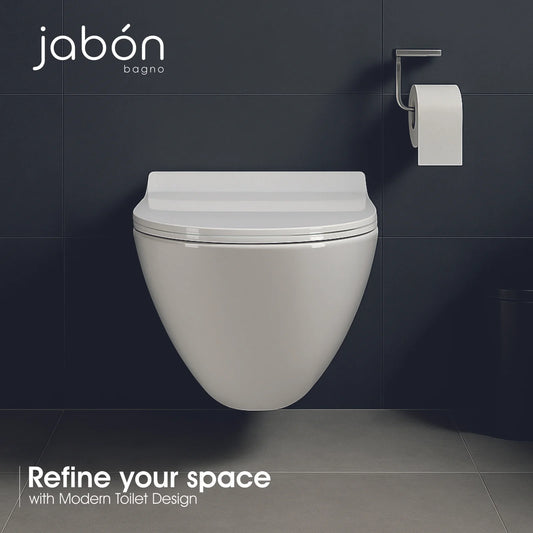
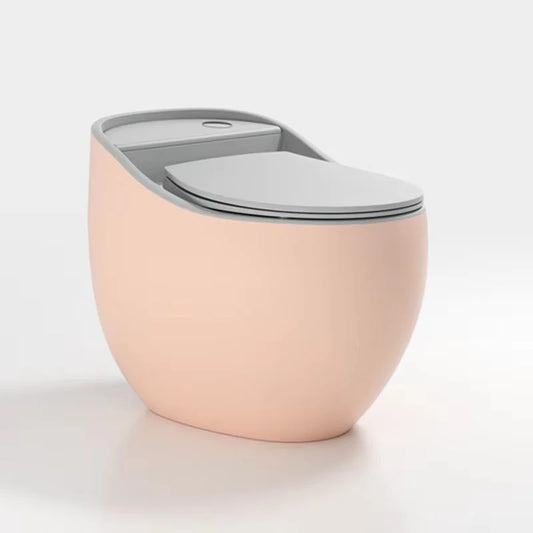
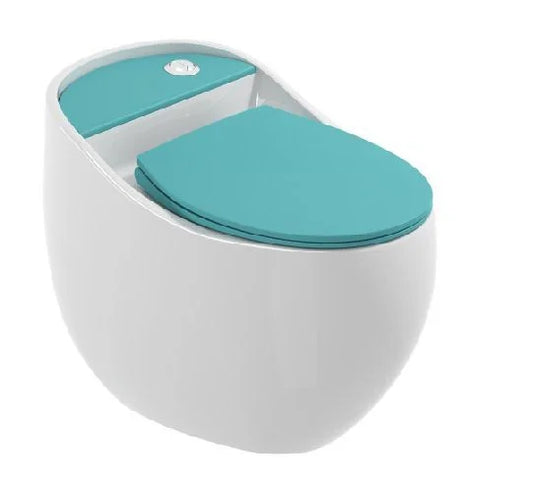
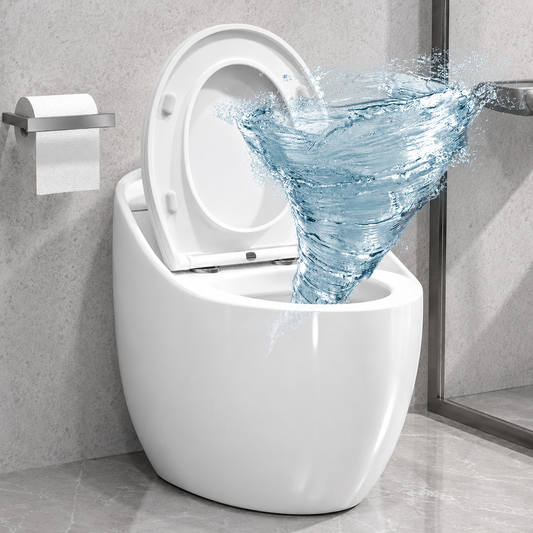
This range covers the four ways a western toilet is fitted in India. Wall hung toilets hang off a frame with the cistern concealed, in P trap, with soft close seats and several with an inbuilt cleaning jet. One piece western toilets sit on the floor with the cistern moulded in, in S trap or P trap, with 4 inch and 9 inch rough-in options and syphonic or dual flush. Floor mount toilets with an inbuilt flush tank take the same position in bolder colours. Above all of these sit the smart toilets, with heated seats, UV sterilisation, foot sensor flush, LED displays and wash functions. Bodies are glazed ceramic in white, ivory, grey, black, matte white, matte pink, matte coffee and khaki, with white and green among the two-tone options, and wooden soft close seats on some models. Prices run from around ₹3,500 for a wall hung pan to about ₹60,000 for a smart wall hung unit.
How to choose a toilet
- Find your trap first. This is the one thing you cannot change. An S trap discharges down through the floor; a P trap discharges back through the wall. Order the wrong one and it will not connect.
- Measure the rough-in. For a floor-mounted S trap, the rough-in is the distance from the finished wall to the centre of the floor outlet - commonly 4 inch or 9 inch here. Measure before ordering, not after.
- Wall hung or floor mount. Wall hung frees the floor for cleaning and hides the cistern, but needs a concealed flush valve and a wall or frame that can carry the load. Floor mount with an inbuilt tank is the simpler swap in an existing bathroom.
- Check the projection. Wall hung models vary in how far they come off the wall - the compact models around 533 mm suit tight bathrooms, longer ones around 584 mm give more seat.
- Decide on the jet. Several wall hung models have a cleaning jet built into the pan. If yours does not, plan for a health faucet and its angular stop cock, which is standard practice in most Indian bathrooms.
Flush, seats and smart functions
Dual flush is the sensible default where water is metered or the overhead tank is small, since the half flush uses noticeably less per use. Syphonic flush is quieter and pulls waste away more thoroughly, which suits a bedroom-adjacent bathroom. Soft close seats stop the lid slamming and outlast standard hinges, and wooden soft close seats feel warmer in an air-conditioned room. Smart toilets add a heated seat, a washing function, foot sensor flushing and UV sterilisation - all of which need a dedicated power point beside the toilet, planned before tiling. Concealed cisterns and wall hung frames also need an access panel: if the flush plate cannot be lifted, the valve cannot be serviced.
Common questions
What is the difference between an S trap and a P trap? An S trap takes the waste down through the floor. A P trap takes it horizontally into the wall. Wall hung toilets are P trap; most floor-standing Indian installations are S trap.
What does rough-in mean? The distance from the finished wall to the centre of the waste outlet. Getting it right is what decides whether the pan sits flush against the wall.
Do I still need a health faucet? Unless the toilet has an inbuilt cleaning jet, yes - with an angular stop cock teed off the flush supply to feed it.

-
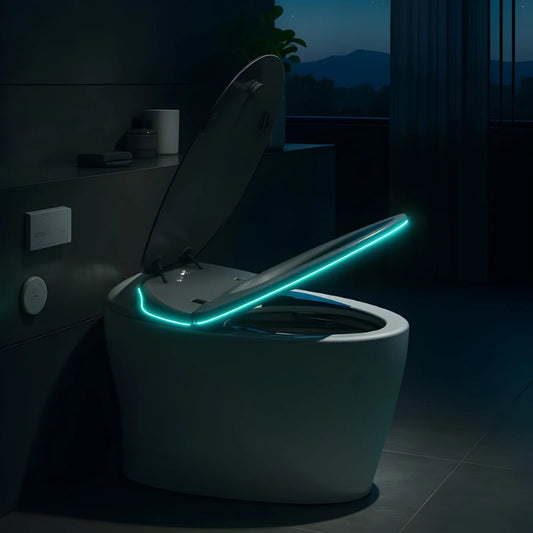
Smart Toilet with Heated Seat, UV Sterilisation & Foot Sensor – Floor Mount White | SATURN
Regular price Rs. 43,000.00Regular price Rs. 43,000.00 Sale priceUnit price perRs. 61,499.0030% -
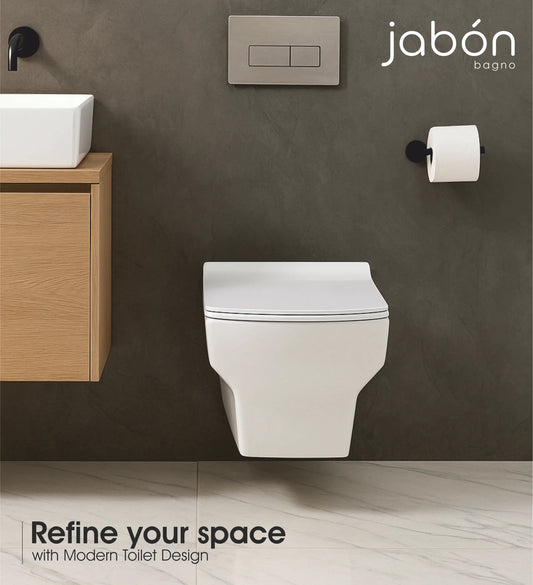
Square Wall Hung Toilet P Trap with Soft Close Seat – White Ceramic | SCOPE
Regular price Rs. 2,700.00Regular price Rs. 2,700.00 Sale priceUnit price perRs. 7,000.0061% -
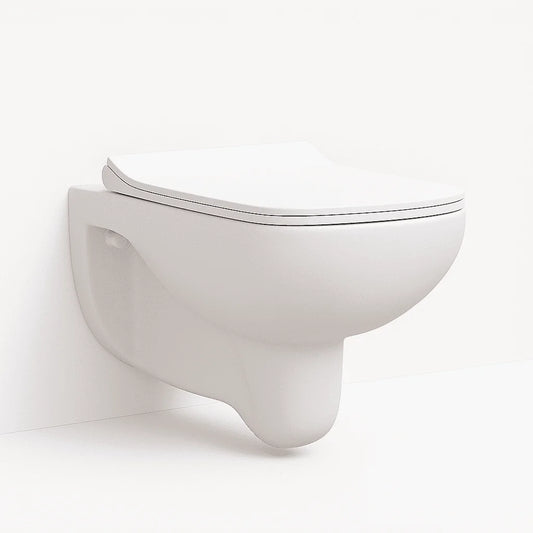
Wall Hung Toilet P Trap with Soft Close Seat – White Ceramic | ROZY
Regular price Rs. 2,700.00Regular price Rs. 2,700.00 Sale priceUnit price perRs. 5,999.0054% -
One Piece Western Toilet S or P Trap, 4 inch / 9 inch Rough-In | HOP
Regular price Rs. 10,300.00Regular price Rs. 10,300.00 Sale priceUnit price perRs. 12,880.0020% -
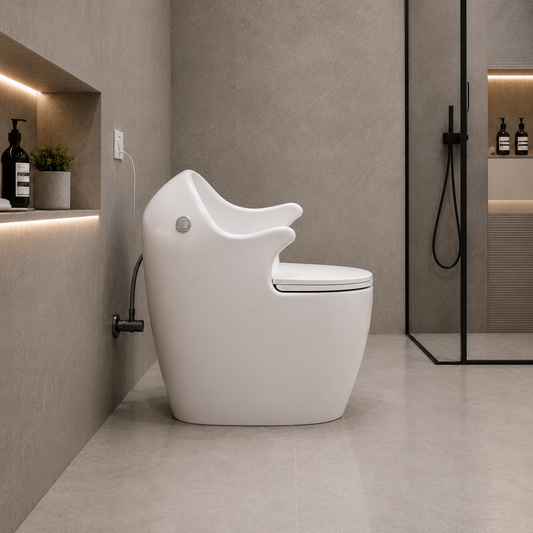
Arm Rest Toilet S Trap with Inbuilt Flush Tank – Glossy White Ceramic | JCI111201
Regular price Rs. 18,800.00Regular price Rs. 18,800.00 Sale priceUnit price perRs. 35,000.0046% -
Wall Hung Toilet with Syphonic Flush & Soft Close Seat | GINOVA
Regular price Rs. 6,910.00Regular price Rs. 6,910.00 Sale priceUnit price perRs. 8,640.00Sold out -
Floor Mount Western Toilet P Trap with Inbuilt Flush Tank – Glossy Ivory | JCT01005
Regular price Rs. 20,999.00Regular price Rs. 20,999.00 Sale priceUnit price perRs. 31,000.0032% -
Round Wall Hung Toilet P Trap with Dual Flush & Soft Close Seat – White | FAST
Regular price Rs. 2,700.00Regular price Rs. 2,700.00 Sale priceUnit price perRs. 7,999.0066% -
Wall Hung Toilet P Trap with Soft Close Seat – Grey WG777 | JCI111189
Regular price Rs. 18,000.00Regular price Rs. 18,000.00 Sale priceUnit price perRs. 22,000.0018% -
Floor Mount Western Toilet P Trap with Inbuilt Flush Tank – Matte Pink | JCT01001
Regular price Rs. 23,999.00Regular price Rs. 23,999.00 Sale priceUnit price perRs. 37,000.0035% -
One Piece Western Toilet S Trap with Soft Close Seat, 9 inch Rough-In | CRYSTAL
Regular price Rs. 12,000.00Regular price Rs. 12,000.00 Sale priceUnit price perRs. 15,000.0020% -
Wall Hung Toilet with Soft Close Seat – Compact 533mm | SIMON
Regular price Rs. 5,760.00Regular price Rs. 5,760.00 Sale priceUnit price perRs. 7,200.0020% -
Wall Hung Toilet with Soft Close Seat – 584mm Projection | PINTAS
Regular price Rs. 7,240.00Regular price Rs. 7,240.00 Sale priceUnit price perRs. 9,050.00Sold out -
Wall Hung Toilet with Soft Close Seat – White Ceramic | GLISTER
Regular price Rs. 4,000.00Regular price Rs. 4,000.00 Sale priceUnit price perRs. 5,000.0020% -
One Piece Western Toilet with Syphonic Flush, 9 inch Rough-In | SPARCO
Regular price Rs. 12,000.00Regular price Rs. 12,000.00 Sale priceUnit price perRs. 15,000.0020% -
One Piece Western Toilet S Trap 300mm with Soft Close Seat – White & Green | PEARL
Regular price Rs. 25,000.00Regular price Rs. 25,000.00 Sale priceUnit price perRs. 27,000.007% -
One Piece Western Toilet S Trap 300mm with Soft Close Seat – White | PEARL
Regular price Rs. 23,000.00Regular price Rs. 23,000.00 Sale priceUnit price perRs. 25,000.008% -
Floor Mount Western Toilet P Trap with Wooden Soft Close Seat – Khaki & Grey | JCT01003
Regular price Rs. 24,000.00Regular price Rs. 24,000.00 Sale priceUnit price perRs. 37,000.0035% -
Wall Hung Toilet P Trap with Soft Close Seat – Black WG777 | 111187
Regular price Rs. 18,000.00Regular price Rs. 18,000.00 Sale priceUnit price perRs. 22,000.0018% -

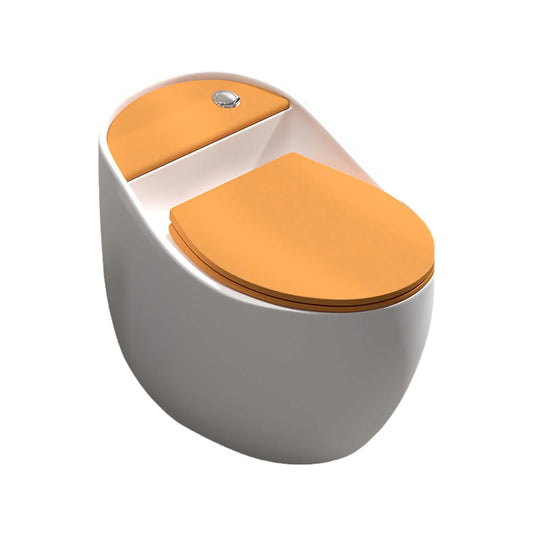
Floor Mount Western Toilet P Trap with Inbuilt Flush Tank – Glossy White & Orange Seat | JCT01006A
Regular price Rs. 21,999.00Regular price Rs. 21,999.00 Sale priceUnit price perRs. 34,000.0035%