Collection: Kitchen Chimney
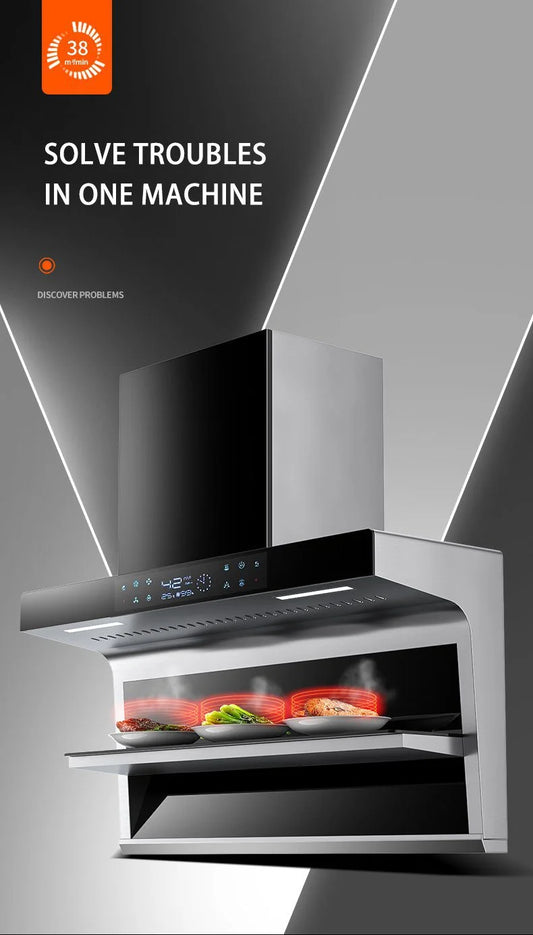
A kitchen chimney extracts smoke, steam and cooking oil at the source, before they settle on your cabinets and walls. In an Indian kitchen that matters more than in most: tempering, deep frying and tadka release far more airborne oil than the cooking methods these appliances were originally designed around, and a kitchen without extraction shows it within a year. The chimney in this range is a 90 cm wall-mounted shallow hood with a tempered glass panel, rated at 42 cubic metres per minute of exhaust air volume, running at 51 to 60 decibels. It measures 900 x 335 x 90 mm, so it clears the cook rather than crowding them.
How to choose a kitchen chimney
- Match the width to the hob, not the kitchen. The chimney should be at least as wide as the hob below it. A 90 cm chimney suits a standard 90 cm four or five burner hob; a 60 cm hob can take either size.
- Suction is about your cooking, not the room. Extraction rate is quoted in cubic metres per minute. Frequent deep frying and high-heat Indian cooking need more extraction than mostly boiling and steaming.
- Mounting height is the detail people get wrong. Too high and it cannot catch the smoke; too low and it is in the way and a fire risk. Follow the manufacturer's figure for the hob type.
- Ducted or recirculating. A ducted chimney vents outside and removes smoke and heat. A recirculating one filters and returns the air to the room. Ducting outside works better but needs a route through an external wall, decided at installation.
- Consider the noise. Extraction and noise rise together. This unit runs at 51 to 60 dB, which is normal for its class, but it is worth knowing if the kitchen opens onto a living area.
Installation and upkeep
This chimney needs a 50 Hz mains supply at the installation point and ships with a replaceable European standard plug, so allow for fitting the plug type used on site. Beyond that, the thing that determines whether a chimney keeps working is filter cleaning. Oil accumulates in the filter and then in the motor housing, and a neglected filter cuts extraction sharply while adding a fire risk. Clean or replace on the manufacturer's schedule, and more often if you fry regularly. The tempered glass panel wipes down with a soft cloth and a mild degreaser.
Common questions
What suction do I need for Indian cooking? More than the European figures often quoted, because Indian cooking releases considerably more oil into the air. Compare the extraction rate against how often you deep fry rather than against the size of the room.
Ducted or ductless, which is better? Ducted, where the building allows it. Venting outside removes heat and smoke instead of filtering and returning the air. A ductless install is the fallback when there is no route to an external wall.
How often should the filter be cleaned? Follow the manual, and more often if you fry frequently. A clogged filter is the usual reason a chimney seems to lose power.

-
Kitchen Chimney 90 cm Wall Mounted – Tempered Glass, 42 m3/min Suction | PEARL 90
Regular price Rs. 80,000.00Regular price Rs. 80,000.00 Sale priceUnit price perRs. 85,000.005%